
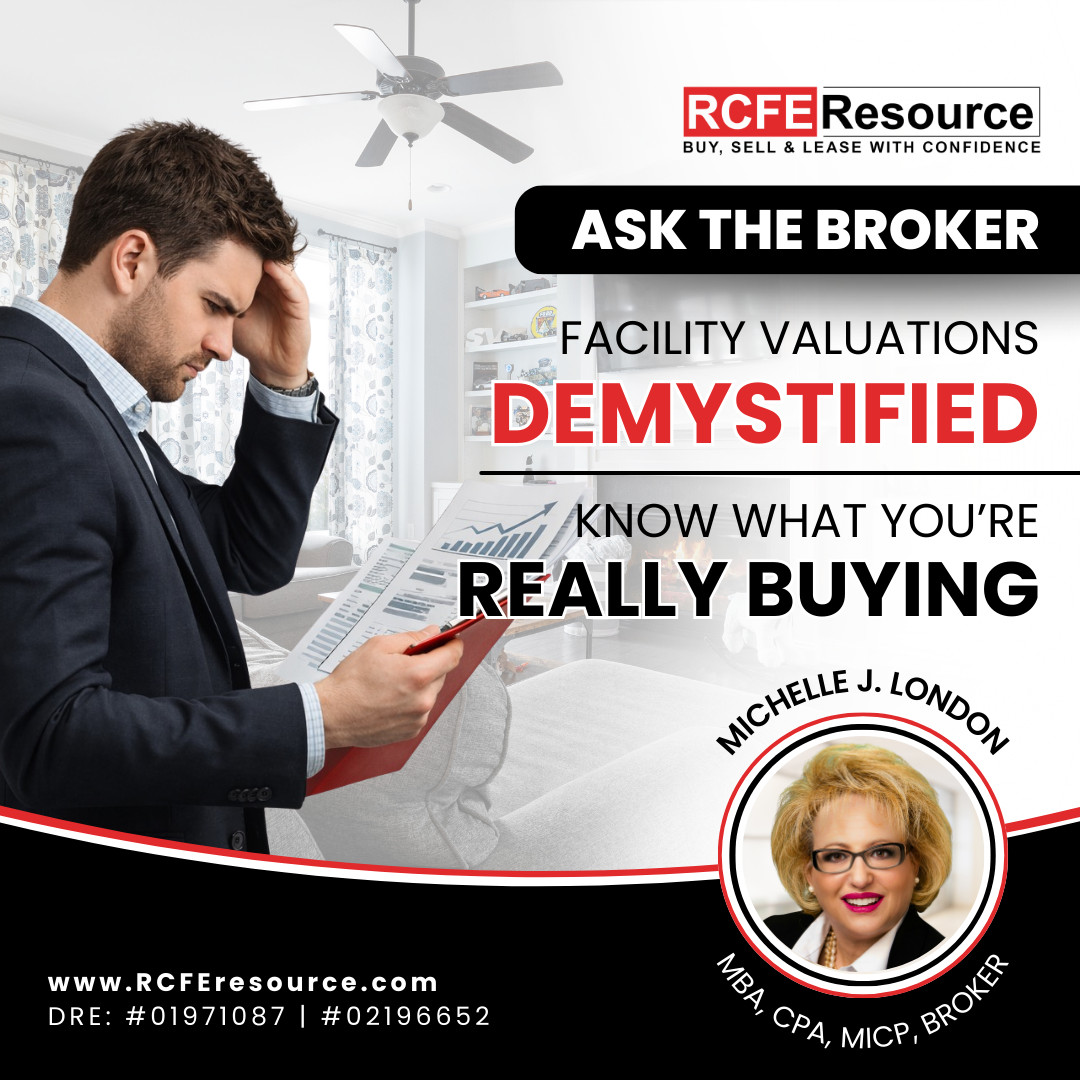
Let’s get one thing straight—if you don’t understand how a facility is valued, you’re negotiating blind. And in this business, blind buyers get burned.
Facility valuation isn’t about what the seller wants. It’s about what the business is worth. And that means knowing how to dissect the numbers, the operations, and the potential with ruthless clarity.
Here’s how professionals determine real value—not inflated asking prices:
🔹 Start with EBITDA—Not Just Revenue
Revenue is vanity. EBITDA (Earnings Before Interest, Taxes, Depreciation, and Amortization) is reality. It tells you what the facility actually earns. If the EBITDA is weak, the price better reflect it.
🔹 Occupancy Drives Everything
A facility with 90% occupancy and a waitlist is a cash machine. One with 50% occupancy and no marketing plan is a liability. Look at historical occupancy, not just last month’s numbers.
🔹 Location Isn’t Just Geography—It’s Demand
A facility in a high-income zip code with aging demographics is gold. One in a saturated market with declining population? Pass. Know your region. Know your competition.
🔹 Licensing Capacity vs. Operational Capacity
Just because a facility is licensed for 6 beds doesn’t mean it’s operating at 6. If they’re only using 4, ask why. Physical layout, staffing, or compliance issues could be limiting income.
🔹 Deferred Maintenance = Hidden Costs
Peeling paint, outdated HVAC, or ADA violations aren’t cosmetic—they’re financial. Every repair you inherit chips away at your ROI. Inspect thoroughly. Budget aggressively.
🔹 Reputation and Online Presence Matter
A facility with glowing reviews and strong referral networks is worth more than one with silence—or worse, complaints. Reputation is leverage. And leverage is value.
🔹 Don’t Overpay for Potential
Sellers love to pitch “upside.” But unless that upside is backed by data, systems, and a clear path to execution, it’s speculation. Pay for what exists. Negotiate for what’s possible.
Valuation is part science, part strategy. If you don’t know how to calculate it, you’ll overpay. If you don’t know how to defend it, you’ll undersell.
This is where amateurs get emotional—and professionals get paid.
Join The Discussion