
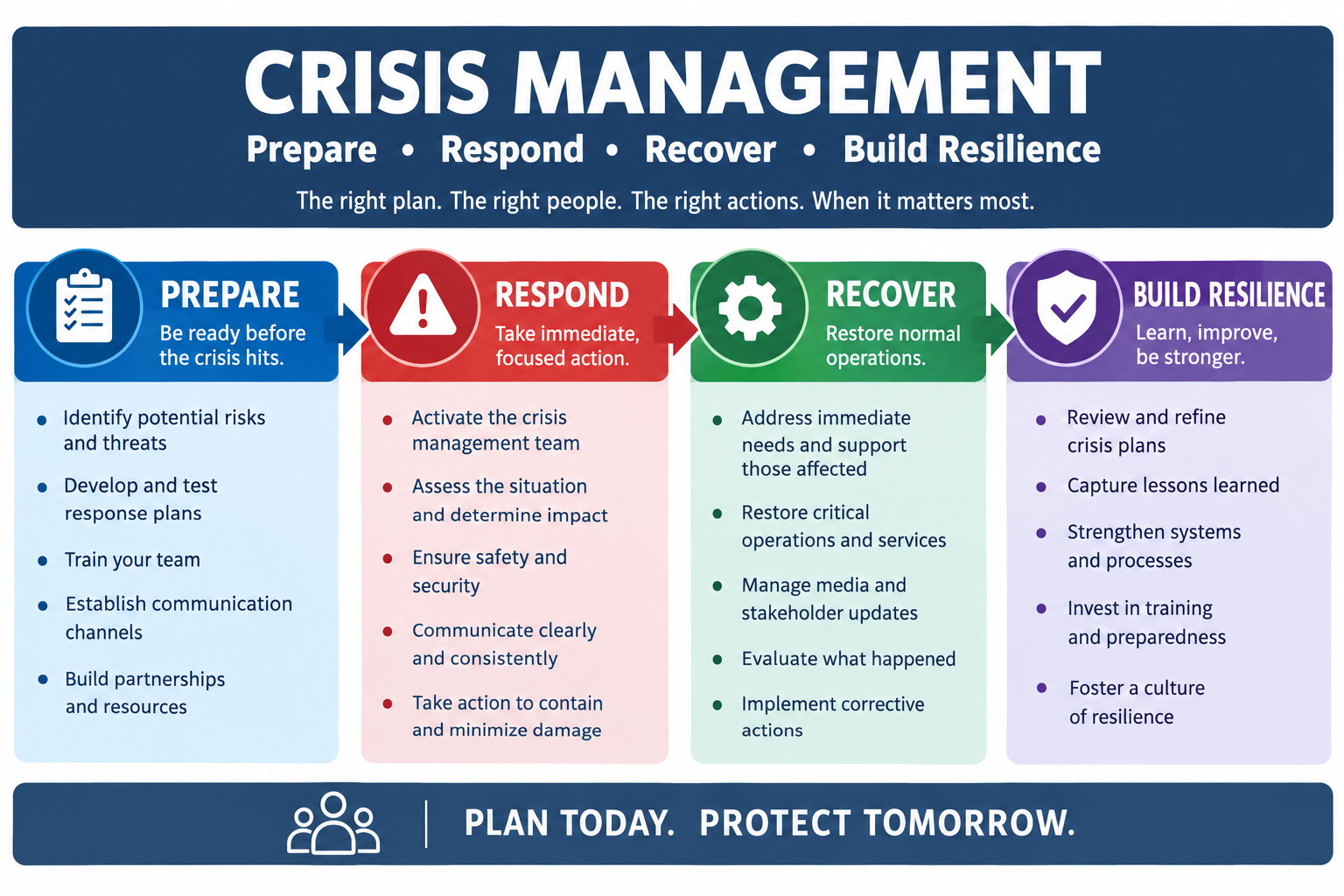
To maintain a strong reputation, you must shift from being a “reactive firefighter” to a “proactive architect” of your facility’s stability. A crisis is not just a test of your systems; it is the ultimate test of your brand. When the unexpected hits, your reputation is saved by your preparedness and your composure.
Here is how to build a “reputation-proof” crisis strategy:
The “Crisis Playbook”
In the heat of a crisis, human beings revert to their lowest level of training. If your staff is guessing what to do, they will panic. If they have a playbook, they will execute.
The Strategy: Develop a clear, laminated “Crisis Playbook” for common scenarios (medical emergencies, power outages, regulatory visits, or sudden staff shortages).
The Authority Move: Run “drill scenarios” during staff meetings. Don’t just talk about them—practice them. When your staff knows the script by heart, they project confidence to residents and families, which keeps panic at bay.
The “Communication Bridge”
Most reputations are destroyed not by the crisis itself, but by the lack of communication during the crisis. Families are scared; if you go silent, they assume the worst.
The Strategy: Have a pre-drafted communication template for families that can be customized in minutes.
The Execution: Assign one person as the “Family Liaison” during a crisis. Their sole job is to keep families updated with facts, not speculation. Transparency builds trust; silence builds fear.
The “Regulatory Shield” (Compliance as a Habit)
A crisis often brings regulators to your door. If you are scrambling to find documents or trying to remember the rules, you look incompetent.
The Strategy: Maintain a “Compliance Command Center”—a digital or physical binder where all Title 22/17 requirements, staff training records, and incident reports are updated in real-time.
The Authority Move: Be audit-ready 365 days a year. When an inspector walks in during a crisis, you should be able to hand them what they need with a calm smile. That is the definition of a professional, elite operator.
Cultivating “Crisis Resilience” in Staff
Your staff needs to know that you have their back when things go wrong. If they feel supported, they will stay calm and keep the facility running.
The Strategy: Foster a “we-are-in-this-together” culture.
The Execution: During a crisis, be the first one there. Be visible. Be the calmest person in the room. When you lead with composure, you give them permission to stay calm, too.
Managing the “Post-Crisis” Narrative
The crisis isn’t over when the situation is resolved; it’s over when the story is finished.
The Strategy: Conduct a “Post-Mortem” meeting with your team. What went well? What didn’t? How can we fix the system so this doesn’t happen again?
The Authority Move: Share the “lessons learned” with your staff. It shows them that you are constantly improving the facility. It turns a painful event into a growth opportunity.
Elite operators don’t fear crises; they prepare for them. They know that crisis is just an opportunity to demonstrate your standard of care.
When you handle a difficult situation with transparency, competence, and calm, you don’t just maintain your reputation—you elevate it. Families will say, “I don’t know what happened, but they handled it with such professionalism.” That is how you become the facility that everyone trusts.
A final piece of advice: If you are currently feeling “crisis-prone” and want to build a more robust, bulletproof system, remember that my office is a confidential space to audit your current operations. Let’s look at your systems before you need them. It’s the smartest investment you can make in your facility’s longevity.